Did you know that every year more than a third of all over-3-day injuries reported to the Health and Safety Executive (HSE) or local authorities are due to manual handling – the transporting or supporting of loads by hand or bodily force?
Most of these incidents cause back injury and lead to, on average, 18.4 days off work. In some cases, the victim never recovers. This massive human and economic cost is not just caused by the handling of heavy loads, as many injuries also arise through the repetitive handling of lightweight or difficult-to-handle loads.
The types of loads that cause manual handling injuries is vast and could include anything from boxes of goods to animals and patients needing medical attention. Injury-inducing settings range from factories and offices, hospitals and banks, to building sites or even while out and about making deliveries.
The Manual Handling Operations Regulations 1992 (MHOR) exist to help prevent many of these injuries. Regrettably, injuries still occur through manual handling tasks even when individuals know the correct lifting techniques and their physical limitations. Such injuries cause numerous operational problems for businesses, including reduced workplace productivity and morale, to increased financial costs.
The HSE Health and Safety statistics (2020) and effects on business:
- 1.7 million working people suffering from a work-related illness
- An estimated 32.5 working days (2020/21) lost due to work-related injuries
- Handling is one of the most frequent causes of over-7-day injuries (RIDDOR), accounting for 25% overall
- The annual cost of work-related injury and new cases of ill health in 2018/19, excluding long-latency illnesses such as cancer, is estimated at £16.2 billion
Source: www.HSE.gov.uk/statistics
So what can you do to stop these types of costly accidents?
To manage your business’s health and safety, reduce the risk in your workplace. The initial step to preventing injury caused by manual handling activities is to evaluate whether the object needs to be moved or if the task can be performed safely in its current location. If the object can be moved safely, always follow good handling practices to minimise the risk of injury. The subsequent step involves assessing what risks exist in your workplace.
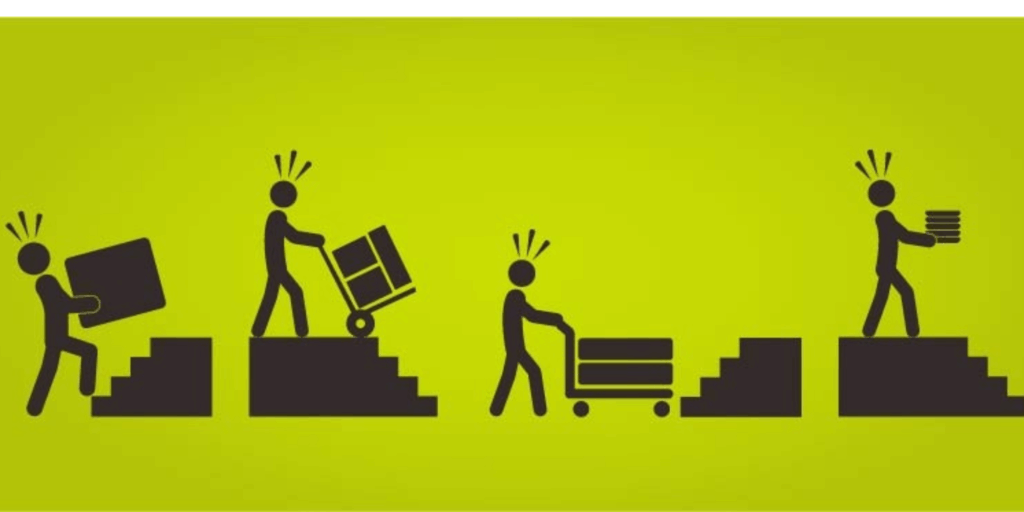
1. Good handling – a visual guide
To promote best practice in your workplace, follow these simple steps when training people in safe manual handling.